
NSIS National Awareness Day Held at the University of Colombo: Strengthening Skills for a Knowledge-Driven Economy

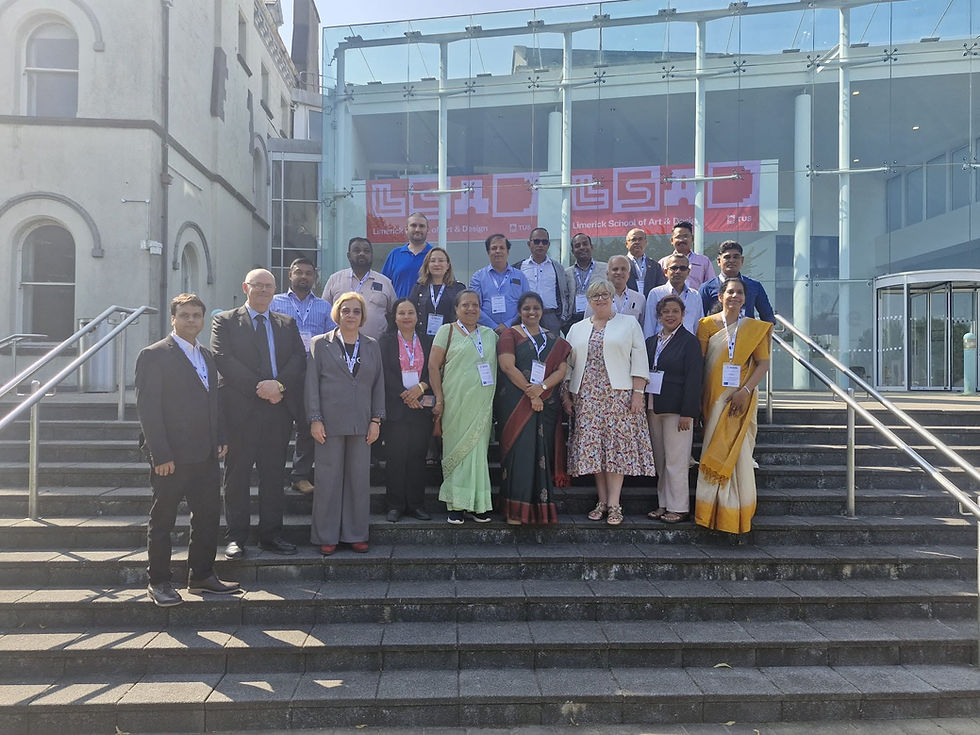
The National Awareness Day (NAD) of the Erasmus+ Capacity Building in Higher Education (CBHE) project “Developing Information, Research, and Digital Skills for Business, Innovation and Entrepreneurship (NSIS)” was successfully held on 19 March 2026 at the University of Colombo. The event represented a major dissemination milestone for the project, bringing together higher education, public sector, and professional stakeholders to discuss the strategic role of advanced skills development in supporting research, innovation, and entrepreneurship in Sri Lanka and the wider region.
The NAD was organised by the University of Kelaniya in close collaboration with the other Sri Lankan project partners—the University of Peradeniya and the University of Ruhuna—demonstrating strong national coordination and shared commitment to advancing the NSIS agenda. The event attracted over 160 onsite participants and convened representatives from more than 20 organisations, including state and private universities, government institutions, and professional bodies. Among those represented were the Central Bank of Sri Lanka, the Telecommunication Regulatory Commission of Sri Lanka, the Consumer Affairs Authority, the National Science Foundation, and the National Chamber of Commerce, reflecting the project’s broad relevance to both policy and practice.

The programme highlighted the importance of strengthening competencies that are increasingly essential in modern knowledge ecosystems—particularly digital skills, research skills, and information competencies that support evidence-based decision-making, innovation capacity, and entrepreneurial activity. Dr Tharanga Ranasinghe, Institutional Project Coordinator at the University of Kelaniya, emphasised the growing significance of these skill areas for national development, underlining that universities and public institutions must work collaboratively to ensure that professionals are equipped to operate effectively in a knowledge-driven economy.
A central session of the event featured an overview of the NSIS project delivered by Mr Padraig Kirby (Ireland), Project Coordinator. He presented the project’s objectives and implementation framework, emphasising key outputs such as the development of a 10-module training curriculum, the creation of an online learning platform, and the application of a Train-the-Trainer (ToT) model designed to ensure sustainability and long-term institutional uptake. The presentation reinforced the project’s commitment to building durable capacity within higher education institutions and enabling wider dissemination beyond the consortium.

The event also included a contribution from Dr Mihai Bârsan (MB Think Tank, Romania), who highlighted the role of digital learning, e-learning systems, and intellectual property awareness in strengthening research and innovation ecosystems. His intervention stressed that skills development is not only a technical necessity but a strategic prerequisite for countries aiming to expand innovation output and enhance engagement between higher education, business, and society.
Overall, the National Awareness Day in Colombo served as a high-impact platform for stakeholder engagement and project visibility, reaffirming the relevance of NSIS to national priorities and regional development. By bringing together institutions across sectors, the event strengthened cooperation, increased awareness of the NSIS training model, and contributed to building momentum for the next implementation phases—including piloting activities and continued dissemination efforts.


Comments