
NSIS Curriculum Training Brings Partners Together in Limerick and Dublin
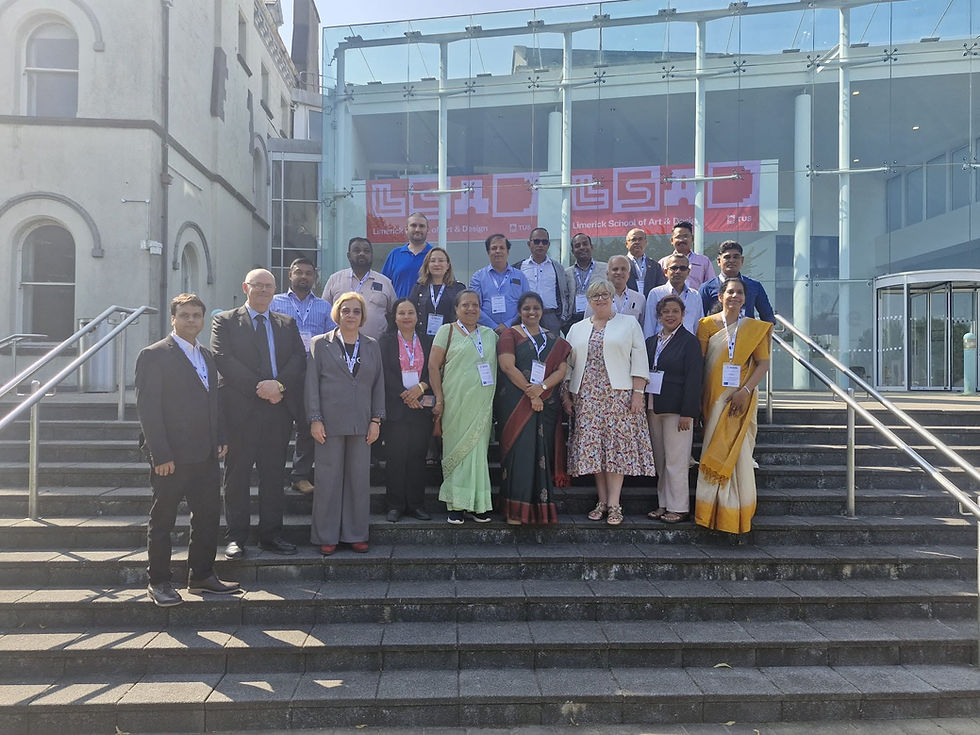
The NSIS consortium gathered in Ireland from 20 to 31 July 2026 for an intensive two-week Curriculum Training Programme designed to prepare partner institutions for the delivery, piloting and long-term integration of the ten NSIS Curriculum modules. The first week was hosted at the TUS Limerick School of Art and Design, while the second week took place at the Dublin City Library and Archives. The wider programme also included travel days on 19 July and 1 August.
The training represented a major implementation milestone for the project. Participants from India, Sri Lanka, Nepal and the European partner institutions worked together to move the NSIS Curriculum from the development stage towards practical delivery. The programme combined module-based training, pedagogical preparation, peer learning, institutional visits, curriculum review workshops and strategic discussions on piloting, dissemination and sustainability.
The programme opened in Limerick with welcome addresses from Professor Raphaela Kane, Chief Academic Officer at the Technological University of the Shannon, and Padraig Kirby, NSIS Project Coordinator. Participants were introduced to the overall training objectives, expected outcomes and structure of the ten-module curriculum, followed by a review of the project’s goals, scope and implementation progress.
During the first week, consortium experts delivered training across nine of the ten NSIS modules. The sessions addressed study skills, digital and information literacy, business and management research, academic and business writing, publishing in online environments, marketing, intellectual property and copyright, innovation and research commercialisation, and employability and career development. Each module was delivered through extended training sessions, followed by structured discussion and feedback, allowing participants to examine both the substantive content and the methods required for future delivery.
The training programme extended beyond the classroom. On 21 July, participants attended a roundtable discussion at the Glucksman Library, University of Limerick, where they exchanged experience and knowledge concerning training practices, institutional services and support mechanisms. This visit offered participants the opportunity to observe established approaches to academic information provision and to consider how relevant practices could be adapted to their own institutional environments.
The first week concluded with a dedicated meeting of the Didactic and Scientific Working Group. Partners reviewed the delivery of the curriculum modules, discussed the production of harmonised didactic materials and examined recommended improvements to module descriptions, lesson plans and supporting resources. The group also prepared for Piloting 1 and Piloting 2, reviewed strategies for promoting the curriculum through the National Awareness Days and discussed the future involvement of stakeholders outside the consortium, including other universities, public and national libraries, and representatives of the business and entrepreneurship communities.
Following the transfer of participants to Dublin, the second week focused more intensively on pedagogy, digital delivery, curriculum enhancement and institutional integration. The programme began with training on effective pedagogical practices, including the sequencing of content and learning tasks, explicit teaching, formative and summative assessment, and the provision of constructive feedback. Module 10, addressing key management and leadership skills for career success, completed the substantive delivery of the ten-module curriculum.

Peer learning continued through study visits and roundtable discussions at the National Library of Ireland and Trinity College Dublin. These sessions enabled participants to compare training methods, support services and institutional practices, while strengthening professional exchange between European and South Asian partners. The same day also included curriculum enhancement and sustainability workshops in which module teams jointly reviewed their module descriptions and lesson plans.
A major component of the Dublin programme was dedicated to the NSIS Online Learning Platform. Partners received training on the platform and reviewed the final drafts of the e-books prepared to accompany each of the ten curriculum modules. Each module team presented its e-book, after which the European partners provided individual feedback and recommendations. This collaborative review process was intended to ensure consistency, accessibility and academic quality across the digital resources that will support both online and classroom-based delivery.
The final stages of the programme concentrated on preparations for curriculum piloting and institutional adoption. Partners were trained to use the observation instruments that will support Piloting 1 and Piloting 2, including observation forms and procedures for documenting implementation. Institutional workshops then invited partners from India, Sri Lanka and Nepal to develop concrete approaches for integrating the NSIS modules into existing training programmes and syllabi, applying appropriate quality assurance mechanisms and engaging research and business communities in future training activities.
The programme concluded with training on the role of the Business and Entrepreneurship Librarian, followed by a final review of the two-week programme, participant feedback, recommendations and future action planning. A formal closing ceremony marked the completion of an important capacity-building phase and the transition towards institutional piloting and wider dissemination.
The NSIS Curriculum Training in Limerick and Dublin strengthened the practical capacity of consortium partners to deliver the curriculum in their respective institutions. It also created a shared pedagogical framework, reinforced collaboration among module teams and established clear next steps for curriculum refinement, digital implementation and piloting. The training therefore represented not only a transfer of knowledge, but also a collective process of preparing the NSIS Curriculum for sustainable use across higher education institutions in India, Sri Lanka and Nepal.


Comments